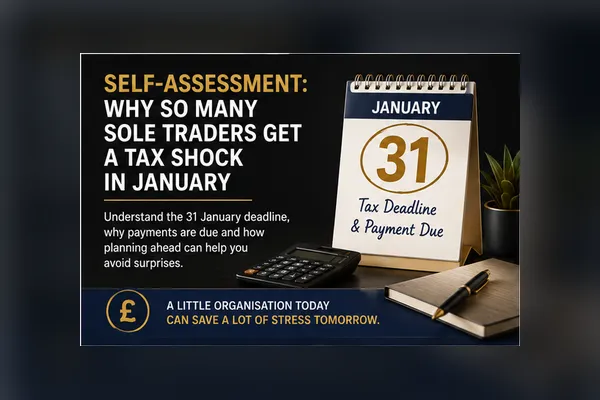
Self-Assessment: Why So Many Sole Traders Get a Tax Shock in January
Self-Assessment: Why You Shouldn't Wait Until January
Every January I have the same conversations:
"Anita, I didn't realise my tax bill would be that high."
"Anita, I don't have all my records."
"Anita, can we get this done before the deadline?"
If any of those sound familiar, you're not alone. Most tax problems aren't caused by people trying to do something wrong. They happen because business owners are busy serving customers, managing staff and running their businesses.
Tax simply gets pushed to the bottom of the list.
Understanding What the 31 January Deadline Really Means
Many people think 31 January is just the filing deadline. It's not.
It's also usually the date when your Self-Assessment tax needs to be paid. Depending on your circumstances, the amount due may include:
Income Tax
National Insurance
Payments on Account towards the following tax year
This is often why business owners are surprised by how much HMRC asks them to pay in January. The amount due can include both the balance for the previous tax year and a Payment on Account towards the next one.
The Biggest Mistake I See
The biggest mistake is spending all the money that comes into the business.
Just because the money is in your bank account doesn't mean it is all available to spend. A percentage of your profits may eventually need to be paid to HMRC.
That's why I always recommend putting money aside throughout the year rather than waiting until January to think about the tax bill.
What Information Will Your Accountant Need?
Preparing a tax return isn't just about knowing your business income. Depending on your circumstances, your accountant may need information such as:
Business income records
Business expenses
Bank statements
Mileage records
Employment income
Rental income
Pension contributions
Gift Aid donations
You may also need to provide details of other sources of taxable income or gains depending on your individual circumstances.
The sooner you gather the information, the easier the process becomes.
Don't Guess Your Expenses
One of the most common mistakes is estimating expenses rather than keeping proper records.
HMRC expects you to keep appropriate records to support the figures reported on your tax return.
Good record keeping doesn't just help if HMRC asks questions. It also makes it easier to identify the allowable expenses you're entitled to claim, so you aren't paying more tax than necessary.
Why I Encourage Clients to Know Their Tax Before Christmas
My goal is simple: I want my clients to know roughly what their tax bill will be before Christmas.
When you know the figure early, you have time to budget, manage your cash flow and make arrangements for the payment without the last-minute January stress.
It also gives us time to identify any missing information or potential issues before the filing deadline is approaching.
Self-Assessment Doesn't Need to Be Stressful
The businesses that struggle most are usually the ones that leave everything until the last minute.
A little organisation throughout the year can make a huge difference. Keeping your records up to date and dealing with your tax return early gives you much more control over your finances.
If you're self-employed and want to make sure you're prepared well before the deadline, I'd be happy to help.
