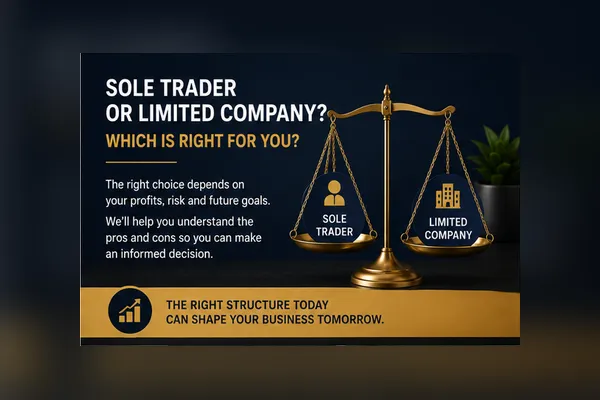
Sole Trader or Limited Company? Which Is Right for You?
Sole Trader or Limited Company: Which Is Right for You?
One of the most common questions I get asked by business owners is:
"Should I stay as a sole trader or set up a limited company?"
The answer is that there isn't a one-size-fits-all solution.
I've had clients save thousands by incorporating at the right time. I've also advised others to remain sole traders because the additional costs and administration simply weren't worth it.
The right decision depends on your business, your profits, your personal circumstances and your future plans.
What's the Difference?
As a sole trader, you and the business are not legally separate. You keep the profits after tax, but you're also personally responsible for the business's debts and obligations.
A limited company is a separate legal entity. The company has its own finances, assets, liabilities and tax responsibilities.
Operating through a limited company can provide a degree of separation between you and the business, although that protection isn't absolute. Directors can still have personal responsibilities in certain circumstances.
Is a Limited Company Always More Tax Efficient?
Not necessarily. This is one of the biggest myths I hear.
Many people assume that incorporating automatically means paying less tax. Sometimes a limited company can be more tax efficient, but that isn't always the case.
The overall position depends on factors such as:
Profit levels
How much money you need to take from the business
How you take money from the company
Your other personal income
Future growth plans
Your individual circumstances
This is why it's important to look at the numbers before making the decision rather than incorporating simply because someone has said a limited company will save tax.
What About Risk?
Risk can be just as important as tax when deciding how to structure your business.
As a sole trader, there is generally no legal separation between you and the business. This means your personal assets could potentially be exposed if the business runs into financial or legal difficulties.
A limited company generally provides greater separation because the company is a separate legal entity. However, limited liability does not protect directors in every situation, particularly where personal guarantees or certain director responsibilities are involved.
Growth and Future Plans
Your long-term plans should also influence your decision.
If you plan to:
Employ staff
Bring in investors
Introduce business partners or shareholders
Retain profits within the business
Grow the business significantly
Sell the business in the future
a limited company may provide more flexibility.
However, this doesn't automatically mean incorporation is the right choice. The structure needs to fit where you want the business to go.
The Additional Responsibilities
A limited company also comes with additional administration and responsibilities.
Depending on the circumstances, this can include annual accounts, Corporation Tax returns, Confirmation Statements, payroll, maintaining company records and complying with Companies House requirements.
For some business owners, the additional administration is a reasonable trade-off for the potential benefits. For others, remaining a sole trader may be the simpler and more appropriate option.
So Which Option Is Right for You?
Before making a recommendation, I usually ask three important questions:
What profits do you expect over the next few years?
What level of risk does your business carry?
What are your long-term goals for the business?
The answers help determine which structure is likely to be most suitable, both now and in the future.
Choosing the Right Business Structure
Choosing the right business structure can have a significant impact on your tax position, personal liability, administration and future opportunities.
The good news is that you don't have to guess.
A proper review can help you understand the advantages and disadvantages of each option, compare the potential tax implications and make an informed decision based on your individual circumstances.
If you're unsure whether you should remain a sole trader or become a limited company, get in touch and let's discuss your options.
